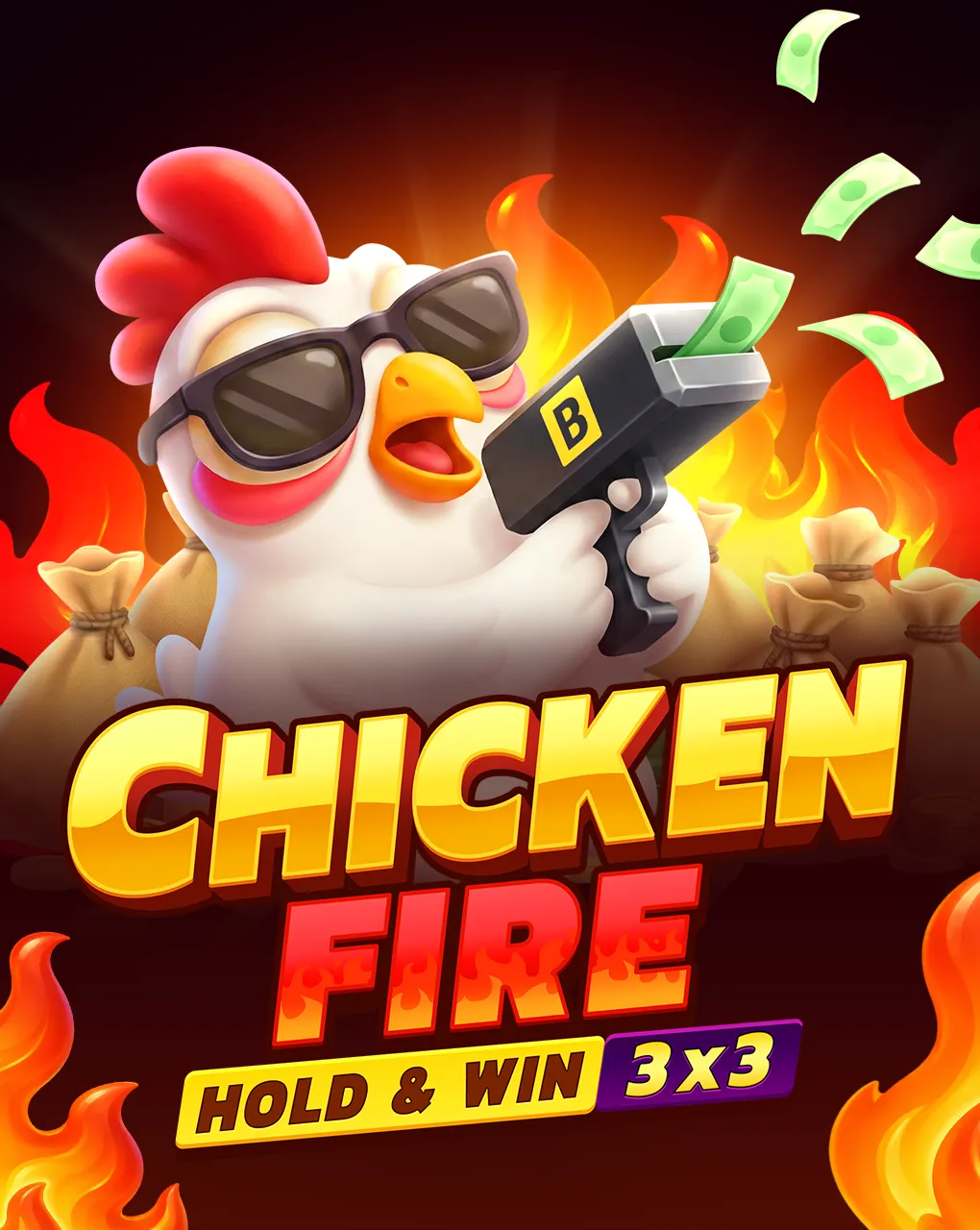
Chicken Fire is a video slot from BGaming with a published RTP of 95.9%, medium volatility and a maximum win of 5000x the stake. This review explains what those numbers mean for your bankroll, how fair play is verified in the wider industry, and how to approach the game responsibly. A free demo is available on this site, so you can get a feel for the pace before deciding whether to play for real money.
Game Overview and Mechanics
Chicken Fire is classed as a slot and video slot, developed by BGaming, a provider known for releasing a broad range of online titles. As with most video slots, each spin is an independent event decided by a random number generator, and results are shown through animated symbols on the screen.
The reel layout, payline structure and any special features are best confirmed in the in-game paytable and info screen, which show how wins are formed and how any bonus elements trigger. Reading it before your first real-money spin is a sensible habit with any slot.
Trying the Demo First
The free demo on this site uses virtual credits, so you can watch how often wins land, how large they tend to be and whether the game suits your style without spending anything. Demo results do not predict real-money outcomes, but they are useful for learning the interface.
Math Profile: RTP, Volatility and Max Win
The official published RTP is 95.9%. This means that over a very large number of spins, the game is designed to return about 95.9% of total stakes, leaving a house edge of roughly 4.1%. It is a long-run average, not a promise for any single session. Operators can sometimes offer different RTP versions of the same game, so check the in-game info screen at your chosen casino.
Volatility is medium, which points to a balance between hit frequency and win size. You can generally expect a mix of smaller returns and occasional larger ones, without the long dry spells typical of high-volatility titles. For bankroll planning, that suits moderate stakes and sessions of reasonable length, though variance still means losing runs are normal.
The maximum win is 5000x the stake. For example, a stake of 1 could in theory produce a top payout of 5000, but such outcomes are very rare and should not be treated as a realistic target when setting your budget.
Fairness, Licensing and Safety
Licensed casinos use certified random number generators so that outcomes cannot be predicted or manipulated. Independent testing labs such as eCOGRA, iTech Labs and BMM Testlabs review RNG behaviour, game logic and payout percentages against the published figures, and they test whether games perform as described.
Before depositing, check that the casino holds a valid licence from a recognised regulator such as the MGA or UKGC. The licence details are normally shown in the site footer, and you can confirm them on the regulator's own register.
Responsible Gambling
Gambling is for adults aged 18 or over and should be treated as entertainment, not income. Set deposit and time limits before you start, play only with money you can afford to lose, and stop if play stops being enjoyable. Organisations such as BeGambleAware offer free, confidential support.
Frequently Asked Questions
- Is there a free demo of Chicken Fire?
- Yes, a free demo is available on this site, letting you try the game with virtual credits and no deposit.
- What is the RTP of Chicken Fire?
- The official published RTP is 95.9%. Casinos may run different versions, so confirm the figure in the in-game info screen.
- How volatile is Chicken Fire?
- Volatility is medium, meaning a balance between win frequency and win size, with no guarantee over a short session.
- What is the maximum win?
- The maximum win is 5000x the stake, though reaching it is very rare.
- How can I verify a casino's licence?
- Find the licence details in the casino footer, then check them on the issuing regulator's public register, such as the MGA or UKGC.